Rock n Roll Suicide: Donny Hathaway (1945-1979)
 The story of the suicide’s life inevitably begins at the end. The life itself forever exists in the shadow of death, every detail a crumb leading back to the foregone conclusion.
Donny Hathaway fell from the window of his 15th floor room at New York’s’ Essex House Hotel on January 13, 1979. He was 33. Despite being ruled a suicide by the coroner, many of his family and friends believe it might have just been an accident. It is, of course, not uncommon for those closest to the deceased to resist the notion that their loved one killed themselves. Such an admission leads to uncomfortable questions of complicity: why didn’t I see the signs? what more could I have done? These painful queries are one of the many burdens that the suicide leaves behind. Sometimes that’s the point and sometimes those questions are the unintended consequences of ending one’s suffering. It is no wonder that some suicides leave no note and do their best to make their death look unintentional. Creating the illusion of an accident can be a gift to those you love. After all, accidents exist in a vacuum, but suicides never do.
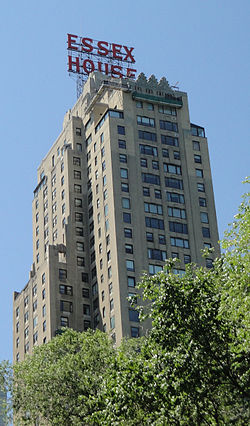 While seemingly odd that the safety glass had been meticulously removed and was on the bed, apparently hanging out of windows was not out of character for Donny Hathaway. He had repeatedly drawn the ire of hotel managers that did not appreciate his habit of singing in his room, so he would simply open the window and sing into the wind. He was also in the midst of a career resurgence at the time. Why kill himself now? his friends and family wondered. His song “The Closer I Get to You,” which he recorded with Roberta Flack, had been nominated for a Grammy and charted at number 2. If his friends and family pointed to his success as a reason why he didn’t kill himself, perhaps they never fully understood the nature of his precarious mental state. In the wake of his triumphant solo 1970 debut Everything is Everything (which included his classic “The Ghetto”), Hathaway was diagnosed as a paranoid schizophrenic. It’s a devastating condition, one that was little understood at the time. Medications were primitive and like so many paranoid schizophrenics, he quit taking the pills whenever he thought he was better, only to further tailspin into the darkness. He spent time in and out of mental institutions and he frequently spoke of suicide.
Success is not a balm for emotional turmoil and perhaps Hathaway came to fully realize the polarizingly hollow nature of fame when he experienced it the second time around. Or he may have been simply beyond caring. It is impossible to make sense of the motivations of those inflicted with this crippling disease, we only have their behavior to decipher. Certainly, his fragile and disturbed mental condition had a lot to do with his artistic split from Roberta Flack in 1973 (their 1972 album of duets had spawned three huge hits) and by all accounts, he spent the subsequent five years deeply broken and disturbed. Upon reconciling with Flack in 1978, he quickly found himself back on top, but he may very well have felt more isolated and alone than he had ever been.
“A Song For You” off his 1971 album “Donny Hathaway.”
Song of the Day: Royal Shredding
Last time I checked, we kicked England’s ass for a reason – and their greedy, incestuous royal family was a big part of it. The entitled aristocracy are a cancerous succubus on history and any democracy-loving individual should be repulsed by their arcane and decadent hold on power – however decorative and ceremonial it may be. These people are baby-eating zombies born in an age which should be remembered for its tyranny, oppression and unbridled excess. To celebrate them is to celebrate our own enslavement. They are a living wax museum, a tourist trap. If the British people had any decency and self respect they’d march the royal vermin out of their subsidized castles and put each and every one of them against the wall. Such swift justice would make excellent fodder for a commemorative coin or perhaps a tea set. I’d certainly be more than happy to buy one of each if it would help the Brits extricate themselves from their sordid co-dependent relationship with a family of drooling, inbred fascists.
oh for chrissake, settle down and just have a cuppa tea: Kinks – Have a Cuppa Tea MP3
Rock n Roll Suicide: Richie Lee of Acetone (1966-2001)
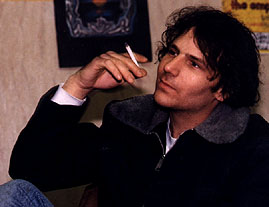 Richie Lee, bass player and singer of Los Angeles’s Acetone killed himself on July 23, 2001. His band had put out York Blvd, their best album, a year earlier. He was 34 years old. I don’t know exactly how he did it, although I think it was an intentional overdose. I suppose that says it all and nothing at the same time. All that matters is that he’s gone now.
He was still young and his music was only getting better. If 90% of life is just showing up, Acetone was on its way to breaking through. They just needed to hang in there, to persevere. Just a bit little longer. In an interview from 1998, he said: “You know, this record [their 4h LP, Acetone] is sort of lending credence to our other records. People had a hard time understanding our last one, If You Only Knew, and the new record’s helping people understand our other stuff. I can remember when I was a kid, you know, I wouldn’t get a band until their third or four record, and then I’d understand it all.”
A common refrain of the suicidal mind is “they will miss me when I’m gone.” They might be an unappreciative public or they might be a girlfriend. Richie Lee may have been happy with his career trajectory, I don’t know. He certainly had a body of work to proud of. But if you’re an artist and you kill yourself, like it or not, you’ve become a martyr for you back catalog. The least your suicide can do is create awareness of the music, to make people take a look at what they will never again get to hear live. The tragedy of Richie Lee’s death is compounded by the fact that his band remains obscure and generally undiscovered.
I miss Acetone. I loved all of their albums, their countrified neo-psychedelic haze perfectly dovetailed with my seemingly aimless Silver Lake life. They played at Spaceland and the Silverlake Lounge all the time. And I took them completely for granted. I hate myself for that. I kept blowing them off, even as I wore out their CDs, hypnotized by their spell, splayed out on my couch. I may have seen them open for someone else, but if I did see them live, pitifully, I don’t remember it.
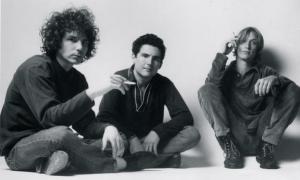 My skin literally warms when I hear this band; my blood rushes. Their rich, fuzzy layered glow is infectious, both a balm for the depression I often felt in the 90s and a means to revel in it. Now, ten years after their last recording, it still has its same potency. Richie Lee was my age and from what I understand lived not so far away. We probably traded glances at Rockaway Records or at the Backdoor Bakery. Maybe seeing Acetone live would have been getting too close. Maybe it was too much like looking in the mirror and I knew I couldn’t stand what I’d see.
When a songwriter pulls the final curtain on himself, it’s hard not to go through old lyrics, looking for clues, but with Richie Lee, the writing could not have been more on the wall. A literary detective is not required for this post-mortem. Their first album Cindy begins with the tune “I’m Gone.” It’s about a guy thinking about drowning himself in the ocean. Other song titles include “I’ve Enjoyed as Much of This as I Can Stand, ” “I Don’t Really Care” and a cover of “Sometimes You Just Can’t Win.” On York Blvd, it appears that things might be looking up with “Things Are Gonna Be Alright,” but he didn’t really mean it. That song, which opens the album, begins with Richie Lee singing:
You may try and try again
Not to be unsatisfied
Just squeezing by one more time
But how long do you go on
Believing things are gonna be alright?
Those words gut me. I want so much to say that he’s looking at it all wrong. How long do you go on? Richie Lee knew the answer before he framed the question. Not much longer at all.
I want to say to Richie Lee that life can be a grind and things aren’t going to be alright – at least, not for long – and to believe they will be is only setting ourselves up for disappointment. Because even when things are okay, we’ll just want more. We’re never satisfied. We only appreciate the present when it’s too late, when we see it fading fast in the rear-view mirror. Maybe all we can do is realize that things are hopelessly fucked up and they always will be. Life can be a tragedy or a comedy, it’s up to us. Either way, it’s pretty entertaining, but only if we’re alive to watch the show … that is, if we’re willing to get off the fucking couch and just go to the show in the first place.
But, of course, Richie Lee is gone now, so that just leaves me talking to myself.
Acetone – Things Are Gonna Be Alright MP3
Acetone toured with Spiritualized in 1997. Jason Pierce and Richie Lee were friends. “The Ballad of Richie Lee” can be found on their 2003 album “Amazing Grace.”
Spiritualized – The Ballad of Richie Lee MP3
Song of the Day: Spiritualized – Lord, Let it Rain On Me
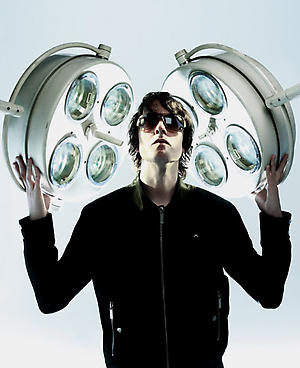
Got Rain? Bring It.
It’s raining so hard right now, it may just never stop.
I don’t mind it so much, but the dogs would like a break in the clouds, if that’s what it’ll take to get me to take them on a walk.
The Stub Project: Soul Asylum and the Jayhawks – Midway Stadium – St. Paul, MN – 8.17.1995
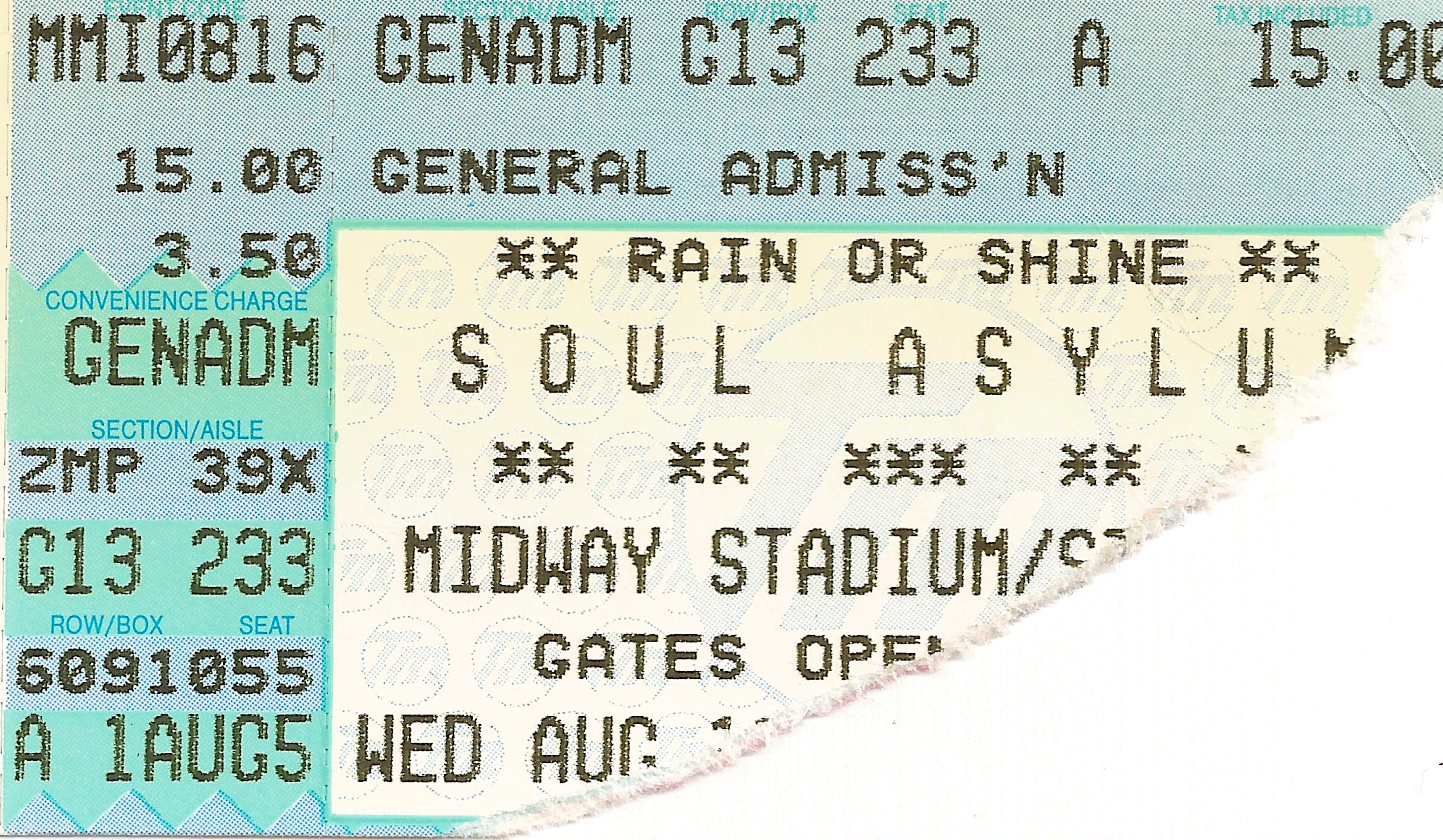 There was a time when Soul Asylum was the Greatest Live Rock Band in the World. August 1995, however, was not that time. By then, Soul Asylum was the object of ridicule and mockery. Their crime: success. After a decade of releasing albums that could never quite compete with their riotous live shows, Dave Pirner traded in his Minneapolis girlfriend for Winona Ryder and their 1992 album, Grave Dancer’s Union went triple platinum. Soul Asylum sang at Clinton’s inauguration in 1993 and they were on the cover of Rolling Stone in June 1995.
Oh, the shame.
Several scientific studies from the era proved that one’s contempt of Soul Asylum was directly reciprocal to one’s own jealousy. With the exception of Paul Westerberg, in the early 1990s there’s not a hetero dude in America who didn’t want Winona Ryder. And if their hit “Runaway Train” didn’t make you cry, despite yourself, you’re one cold motherfucker.
 In a parallel world, perhaps The Replacements, who had broken up in 1991, would be headlining this hometown affair, but in the way Westerberg didn’t want Winona, he apparently didn’t really want to be famous either. And who can blame him? Fame is a plastic soul-crushing killing machine. It’s a drug, maybe the worse of them all. They don’t just build you up to tear you down, they humiliate you. Exhibit A: the cover from Rolling Stone. What kind of fevered, blistered mind would cut and paste a band together in such a grotesque manner? Paul Westerberg most certainly laughed his ass off when he saw it … Or maybe he cried, realizing he dodged the most blunt of scalpels. That could have been him with his neck buttoned together with his bandmates. If only the editors of Rolling Stone had the courage of their perversion and gone all the way with an accompanying Jame Gumb-inspired fashion spread, there may have been some merit to this grim affair.
At this point, I had already seen Soul Asylum around ten times. They weren’t performing many of their old songs anymore; this was a streamlined arena rock ready band. Had they sold out? Perhaps. Or had they simply evolved into a well-honed ready radio touring machine? That seems a bit more fair.
How quaint life was back in the early 1990s. We still worried if our favorite bands were selling out. Now, that’s the entire point. Bar by bar, Soul Asylum built a reputation as one of the best live acts of its generation and they finally hit it big. It’s a great story – a rock n roll dream – but their success was treated like a betrayal. Now, if you haven’t licensed/whored at least three tunes off your debut album to a teen drama or a cellphone commercial, you’re apparently not seriously interested in creating awareness about your music and might as well serenade yourself in the mirror.
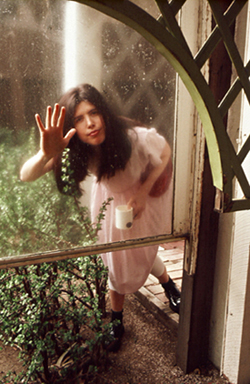
Victoria Williams - Listen and You Will Be Healed
Like Dave Pirner says, nothing draws a crowd like a crowd. And the Twin Cities came out full force for this show at Midway Stadium, home to the independent Northern League’s St. Paul Saints. Matthew Sweet and the legendary Jayhawks filled out the bill. Oh yeah, and Victoria Williams – one of the greatest songwriters alive – was there too, sitting in with the Jayhawks. I don’t really remember Matthew Sweet at all. We probably got there late. The Jayhawks, as always, were excellent and simply to get a glimpse of Victoria Williams was worth the price of admission on its own. Her mere presence graced the proceedings. If there are angels living amongst us, she is one of them. It was already an exceptional event and the headliner had yet to take the stage.
As if they were a fake pair of distressed jeans, Soul Asylum’s indie-cred was in tatters by the summer of 1995. Still, their hometown embraced them and they responded by knocking out a hook-laden, anthemic set. It was a perfect soundtrack to a summer evening.
The only way it could have been better is if, say, I was getting a rubdown. Thankfully, by now Soul Asylum knew a thing or two about living the good life. Accordingly, a masseuse was set up on the field and for the first part of their set I was getting a massage from Ladi Mahuleia, expert at intuitive therapeutic massage and chakra balancing. It really was quite an excellent innovation and a service which should clearly be featured at more musical events. It’s amazing what a delightful sheen a massage can put on the world.
Maybe success isn’t so bad after all.
Here’s Soul Asylum playing “Black Gold” at the Clinton Inauguration. Dave Pirner’s wipe-out becomes a prophetic metaphor for the missteps of the incoming administration.
The show closed with everyone singing Victoria Williams’ instant classic “Summer of Drugs.” Here’s Pirner and Victoria on Letterman:


 lonesomebeehive