Song of the Day: Luna – 23 Minutes in Brussels
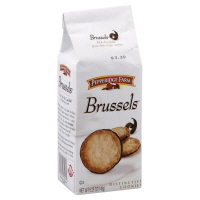
- greatest store-bought
cookie ever

While it might sound like it, I’m not bragging when I say could devour a whole pack of Pepperidge Farm’s Brussels cookies in under 23 minutes. It really wouldn’t be that hard. In fact, I could probably finish a pack before the song was over.
They’re just that good.
But not as good as Luna, who I binged on through much of the 1990s without adding a pound (although their hypnotic sound certainly made it hard to keep the ladies away).
“23 minutes in Brussels” first appeared on Luna’s Penthouse in 1995, which most certainly should be in any self-respecting CD collection. The video is from the end credits to the concert film Tell Me Do You Miss Me (yes Luna, I do).

- Emmylou and one very lucky dog

Chuck Berry’s “You Never Can Tell” is probably best known for providing the soundtrack to the iconic dance scene in Pulp Fiction. Over thirty years after it was first written the infectious groove would propel Uma Thurman to international stardom and all she had to do was display the simmering sexuality of a plastic lawn flamingo. Meanwhile, a bloated John Travolta played his part in Tarantino’s game of cheap allusions, parlaying the corrosive irony of the era into a career resurgence. It’s quite an accomplishment for a tune that Berry wrote while in prison for having sex with a 14 year-old Apache girl who he had transported (in today’s parlance, trafficked) across state lines to work as a “hat check girl” at his St. Louis music emporium “Berry’s Club Bandstand.”
Covered by the likes of Jerry Garcia, John Prine and Bruce Springsteen, it is, however, the great Emmylou Harris who provides the most rousing and indelible version of this song. Here she is from around 1978:
As if Emmylou could possibly be any more incredible than she already is, an interview on NPR recently revealed that she runs a dog rescue in the backyard of her Nashville home. If there is a greater calling in the world that helping out dogs in need, I have not heard of it. Hopefully, they’re taking notice in Sweden. If there is any sense of justice in the world, Emmylou will be adding a Nobel Peace Prize to her mantle in 2011. Check out info on Emmylou’s dog rescue here.
Meanwhile, Ronnie Lane covered the tune in 1974. Ronnie in many ways is a UK version of Gram Parsons, who of course, was the first to record Emmylou …
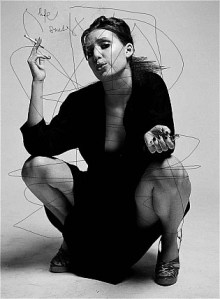
- smoke ’em if you got ’em
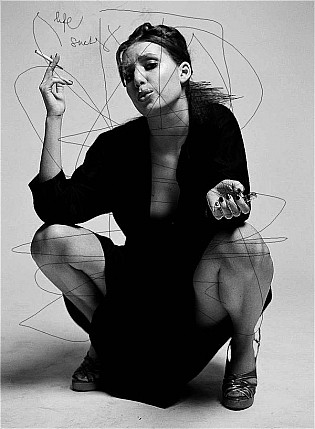
It’s hard not to love an international pop star with a hippie heart, so why even try? If you have not yet surrendered to the Swedish sensation, there’s really no use in holding out. Sometimes you have to pick sides in this world and if we’ve learned anything from the Swedish, it’s that being neutral is really just a generous way to say you’re a Nazi appeaser. So basically, it comes down to this: you are either on the side of all that is good and decent in the world (Lykke) or you have willingly exiled yourself into the dark void of utter hopelessness and despair (not Lykke).
The choice is yours. Your will is free (unless, of course, you turn your back to Lykke, in which case, your soul is a marionette controlled by Satan).
Lykke Li turns the world upside down like it’s her own personal snow globe. She’s a pop star, yet her music doesn’t make you feel like you just got a lobotomy. She’s beautiful, but not glamorous. She’s otherwordly, yet seemingly down to earth.

- “If you want to complain,
I’m not the complaint department

Here Lykke takes it to the streets of East LA with the boys from Bon Iver offering back-up. Lykke Li will be playing Seattle’s Showbox next week and while I will be pretending that I am merely there to chaperone my (non-existent) daughter, I am enthusiastically looking forward to her show.
A more polished version:
Song of the Day: John Cale – Pablo Picasso

- An asshole? Moi? No one has
ever said such a monstrous thing.
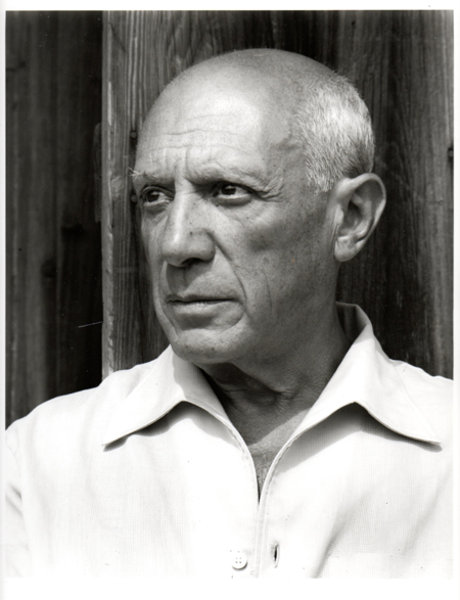
John Cale released a version of The Modern Lovers’ “Pablo Picasso” on his album Helen of Troy in 1975. Three years earlier he had produced the track for The Modern Lovers, but due to a variety of factors, their debut had yet to be released. The Modern Lovers would eventually be unleashed onto the world in 1976, four years late and still absurdly ahead of its time.
Here, Mr. Cale covers the homage to the great artist, lady’s man and renown midget.
The original:
Meanwhile, The Simple Minds are under the impression that Pablo Picasso was, in fact, frequently called an asshole. It is a controversy that is destined to rage through the ages.
Rock n Roll Suicide: Elliott Smith (1969-2003)
 Elliott Smith died young, but he didn’t leave a beautiful corpse. As one of the most talented songwriters of his generation, he’d made a career of singing about sadness and suicide. He was the melancholy minstrel of his day. In retrospect, his death seems inevitable. After all, he lived what he wrote and he wrote what he lived. As a junkie, chronically depressed alcoholic and survivor of sexual abuse, Elliott Smith was never short on grim inspiration. His lyrics and life tragically dovetailed, his music explored every nuisance of his sadness to the point that he wore his pain like an infected tattoo.
For several years, Elliott was one of my favorite musicians, but as it became increasingly clear that he was determined to put himself out of his misery – whether via the slow dive of hard drugs or simply fast-forwarding to a more direct method of suicide – it became too depressing for me to listen anymore.
Ultimately, Elliott chose the quick route to death, stabbing himself in the chest, slicing through the heart that had been so repeatedly broken and abused. I suppose, there is some controversy whether his girlfriend, Jennifer Chiba, did the deed, but I don’t buy it. By her account, they had been fighting and she locked herself in the bathroom. When she heard a scream, she came out and found Elliott with a knife sticking out of his chest. While she was probably poison – many who knew them say they had a Sid/Nancy relationship – the fact remains that she was never seriously pursued as a suspect.
The last time I saw Elliott play was on January 31, 2003 at the Henry Fonda Theatre in Los Angeles and it’s a memory I don’t particularly relish. Always a vulnerable performer, Elliott hadn’t played in a while and it’s hard to describe his set that night as anything but a disconcerting mess. Never have I seen a musician so clearly wasted (quite an achievement). Babbling between songs, forgetting lyrics, straining at the confines of his own skin – all in all, he was a disaster. He spent the show hunched over his guitar, sitting down in a chair where the majority of the crowd couldn’t see him, plucking away, often out of tune. “I can’t stand up because I don’t have no knees,” he explained. People will tell you that Elliott had kicked heroin and was clean for the last year of his life – and maybe it’s true that he wasn’t on smack, but that night in Los Angeles he certainly wasn’t straight.
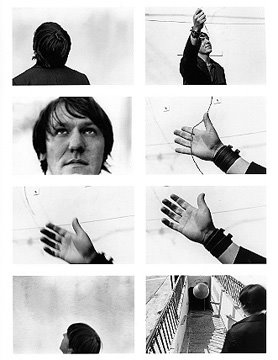 An artist’s sobriety only concerns me if it has a negative impact his work. Otherwise, I really don’t care. But Elliott Smith was lit that night and at best, he wasn’t doing the music any favors. While I will concede that his playing and singing were better than I remember (video of the show is below), his in-between song banter was a painful spectacle to witness. Most of the people on the floor couldn’t see Elliott and it’s too bad that the largely underage crowd didn’t get a good look at their broken angel hero in all his wasted glory. Maybe they would have seen how sick he was and not so quick to deify him.
Elliott said he wanted to play some new songs, “They might seem dark, but not for now necessarily … but no, I’m fine. Really … Some songs are dark, but they make you happy anyway.” As anyone who loves Elliott Smith’s music knows, there is indeed comfort in being sad. But when most of your songs are sad songs, the least you can do for your body of work is to stay alive, to give a ray of hope to all of those people who take the misery journey with you. There’s a reason that memoirs chronicling the saddest, darkest, most dysfunctional lives have resonance and it’s because those books come with the implicit promise that those trials can be survived – otherwise they couldn’t have been written down in the first place.
Elliott’s suicide nullified not just his life but also his songs’ inherent message that while life can get rough, you can transcend the turmoil. If you are going to wallow in pain, let that pain be like armor that shields you from more of the same. Before Elliott killed himself, the songs themselves were a triumph because he was still here to sing them. While one could hope that by revealing the intimate details of his pain, Elliott inoculated himself from feeling even worse; the joy of hearing a sad song, meanwhile, is in knowing that you’re not alone, that you can survive.
Elliott would play one more show the next night at the Henry Fonda and then once again three months later in Portland. And that was it. Amazingly, there’s a video on YouTube of the show I was at. It’s handheld and a bit shaky, but it pretty much nails the mood of the performance. I suppose the concert is a bit of a Rorschach Test. Many people who were there and a lot of his fans who have heard it since praise this show; they think he was great. His vulnerability, his false starts and his fuck-ups make him authentic in their eyes. But not everyone was so on-board. Around 45:00 in, someone (not me) yells for him to get a backbone. “A backbone?” Elliott responded. “What the fuck? … I could tell you a dream I had last night, otherwise I couldn’t be more fucking for real.” Then he retreated, “I don’t mean to pick on you. Maybe I didn’t understand what you meant? … I’m playing a lot of dark songs tonight, which is funny, because I’m very healthy now. So, don’t get bummed out by these songs.”
I was bummed out, though. Admittedly, I came to the show with a lot of emotional baggage. At the time, someone close to me was addicted to heroin, so seeing Elliott Smith completely wasted was a bitter pill. What I saw was an artist that was not only obviously sick, but was also being glorified for his addiction. The crowd seemed to be willingly enabling his self-destruction, happily accepting his obviously self-deluded suggestions that he was okay now. It was too much for me to bear.
I walked out of that show sad and shaken. I was quite sure that Elliott Smith would be dead soon. I did something I never do and posted my concern on a fan website. Naively and stupidly, I was hoping that through this site – theoretically a community of people who love him – maybe Elliott would get word that despite the misguided affirmation he got at the show, he still had fans who actually cared that he was throwing his life away.
Instead, in response, a cabal of sycophants bleated and moaned their anger and denial. The general consensus was that Elliott’s his own man, he can do what he wants. It’s none of our business. One post read that “Elliott says he’s not on drugs, we should believe him.” Obviously, that person has never dealt with an addict and I hope they never have to. Addicts lie. All the time. They have two jobs: getting fucked-up and then lying about it. Drunk or strung out on smack – does it really matter in the end? I don’t know of too many rehab programs that give out medals for kicking junk, yet still hitting the bottle.
Either way, the end for Elliott Smith was near. And when he died in his home, less than mile from my own, there was certainly no joy in being right about it. Mainly, I was just angry and I suppose I still am.
 I can forgive his younger fans for their orthodox devotion (how large of me, I know). Times had changed and the kids have been taught to celebrate diversity, not to pick apart differences. Apparently under the new paradigm, throwing away your life is just a choice that shouldn’t be judged. But when I was young (how awful it is to type that phrase), even Deadheads were able to differentiate between a good show and a bad show. Even Deadheads had the decency to be concerned about Jerry Garcia when he was killing himself with heroin.
Not that it matters to anyone but me, but I don’t know that I can forgive Elliott. In my eyes, his suicide betrayed his songbook; it wasn’t a confirmation of its authenticity, it was a denunciation of it. I’m usually empathetic to victims of suicide. If he had slipped away with, say, an overdose, I probably wouldn’t feel this way, but his suicide was so unabashedly violent, the aftershock felt like a screaming exclamation point, a big fuck you to all the people who he had inspired to persevere through their own pain.
As an aside, oddly, I don’t feel that way about Kurt Cobain’s suicide, whose music I revered and whose death was equally violent … but I guess the difference is that Cobain didn’t solely traffic in misery the way Elliott Smith did. Nirvana was about release and, in a twisted way, suicide is the ultimate expression of that. Meanwhile, Elliott Smith’s music is about sadness and while suicide may not be far away, sharing that kind of pain is purely masturbation unless the ultimate goal is to overcome it.
“Fucking up is part of it, man. If you can’t fail, I guess you have to always win. And I don’t think you can always win,” said Elliott near the end of his show at the Henry Fonda. And some in the crowd cheered.
Well, fuck you Elliott, at least you could have tried to win. Instead, it seems, for Elliott Smith, losing was inevitable. And whether he liked it or not, he owed it to himself and his music to say yes to another day.


 lonesomebeehive